HERBAL GARDEN
Vivek college of Ayurvedic Sciences & Hospital Bijnor UP
वटवृक्ष
Classification
Synoyms
Nyagrodha
Bahupada
Vata
Habit
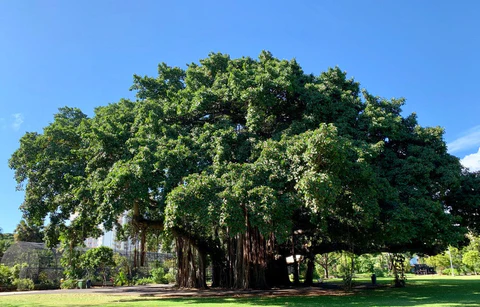
Large, evergreen tree with aerial roots. Can spread over a large area, forming a canopy.
Habitat
Native to India and tropical Asia, Found throughout India in forests, roadsides, temples, and villages. Thrives in warm, humid climates.
Morphology
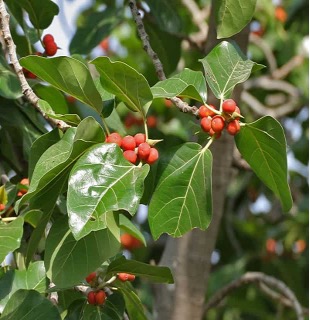
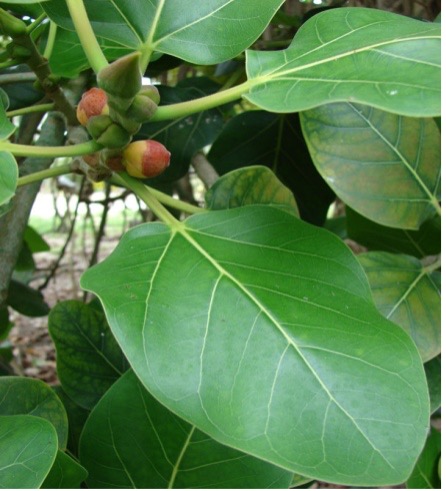
- Leaves: Large, leathery, ovate with entire margins, dark green
- Stem/Bark: Greyish brown, rough; trunk with many aerial roots descending from branches
- Fruits: Small, rounded figs in pairs, turning red when ripe
- Roots: Adventitious aerial roots, providing mechanical support
Chemical Composition
Flavonoids
Tannins
Saponins
Glucose
β-sitosterol
Leucocyanidin
Enzymes like ficin (in latex)
Guna-Karma
Rasa-Kashaya (astringent), Madhura (sweet)
Guna- Guru (heavy), Snigdha (unctuous)
Virya-Sheeta (cooling)
Vipaka- Madhura (sweet)
Karma- Stambhana, Vranaropana, Balya, Raktastambhaka, Shothahara
Doshakarma- Balances Pitta and Kapha
Medicinal uses
Latex used in bleeding gums, cracked heels, and wounds
Bark decoction used in diabetes, leucorrhea, and diarrhea
Leaf poultice applied to boils and skin inflammation
Aerial root extract used in male infertility and urinary disorders
Used in vaginal disorders and as a general tonic
Useful Part
Bark
Leaves
Aerial roots
Latex (Ksheera)
Fruits
Doses
Bark decoction: 40–60 ml
Latex: 1–2 drops (external use)
Leaf juice: 10–15 ml
Powder: 3–5 g
Important Formulation
Nyagrodhadi Kwatha
Vata Churna
Vata Ksheera
Shloka
न्यग्रोधो मधुरः शीतः स्थैर्ययोः शुक्रवर्धनः।
व्रणशोधनसन्धानस्तथोच्छ्लेष्मविबन्धनः॥
Hindi Name
वटवृक्ष / बरगद
English Name
Banyan Tree / Indian Fig Tree
Botanical Name
Ficus benghalensis
Family
Moraceae