HERBAL GARDEN
Vivek college of Ayurvedic Sciences & Hospital Bijnor UP
इन्सुलिन प्लांट
Classification
Synoyms
Costus igneus
Spiral Ginger
Step ladder
Habit
Perennial, erect, rhizomatous herb
Habitat
Tropical and subtropical regions. Commonly cultivated in gardens and Ayurvedic farms in India, especially in Kerala, Karnataka, and Tamil Nadu.
Morphology
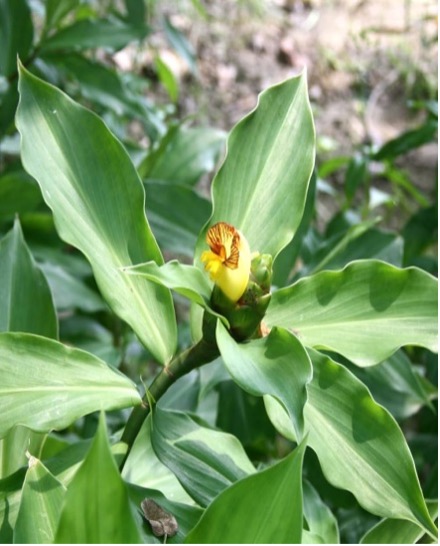
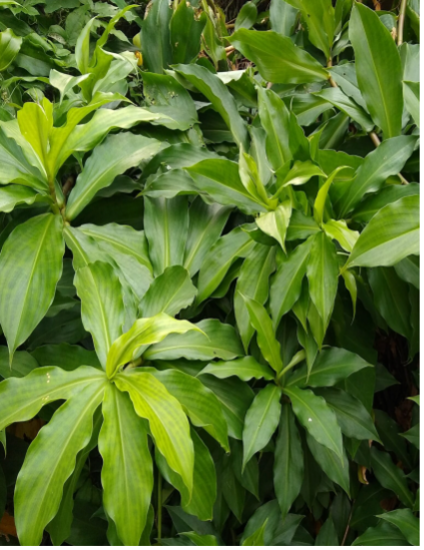
- Erect, unbranched stems with spirally arranged, large lanceolate leaves.
- Leaves are bright green, ovate, 10–20 cm long.
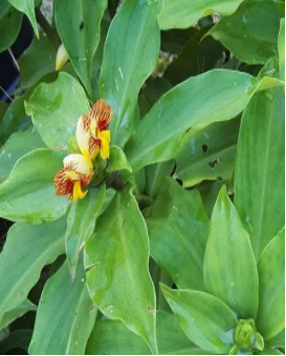
- Orange to reddish-orange, funnel-shaped flowers appear singly at the apex.
- Rhizomes are fleshy and underground.
Chemical Composition
Corosolic acid (major anti-diabetic compound)
Flavonoids
Terpenoids
Saponins
Tannins
Steroids
Alkaloids
β-sitosterol
Diosgenin
Essential oils
Guna-Karma
Rasa- Tikta (bitter), Kashaya (astringent)
Guna- Laghu (light), Ruksha (dry)
Virya- Ushna (hot)
Vipaka- Katu (pungent)
Karma- Pramehaghna, Medohara, Shothahara, Krimighna, Rakta shodhak, Vranaropana
Doshakarma- Kapha, Pittahara
Medicinal uses
Effectively used in Type 2 Diabetes mellitus to reduce blood glucose
Beneficial in obesity, hyperlipidemia, and metabolic syndrome
Anti-inflammatory action helps in joint pain
Used in urinary tract infections and wound healing
Antioxidant and hepatoprotective properties
Useful Part
Leaf and Rhizome
Doses
Fresh leaf: 1 leaf daily (chewed raw or in juice form)
Leaf powder: 1–3 g per day
Decoction: 20–50 ml per day
Important Formulation
Insulin Leaf Powder
Herbal tea
Shloka
इन्सुलिनदायिनी वाञ्छ्या कोस्टस् इग्नीय नामका।
मधुमेहहरः पातुः पत्रं नित्यं सदा नरम्॥
Hindi Name
इंसुलिन पौधा / पुष्पवेला
English Name
Insulin Plant / Spiral Flag / Fiery Costus
Botanical Name
Costus igneus
Family
Costaceae