HERBAL GARDEN
Vivek college of Ayurvedic Sciences & Hospital Bijnor UP
रुद्राक्ष
Classification
Synoyms
Rudraksha
Shivaphala
Rudragola
Haraksha
Bhutaveta
Habit
Large evergreen tree
Habitat
Found in the Himalayan region (Nepal, Uttarakhand), Assam, Bengal, and parts of South India, also cultivated in Southeast Asia (Indonesia, Malaysia).
Morphology
- Grows up to 50–60 feet in height.
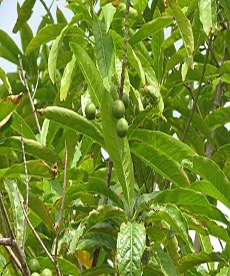
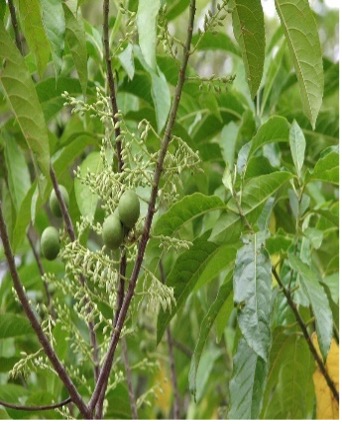
- Leaves are elliptic-lanceolate with finely serrated edges.
- Flowers are small, white and fragrant.
- Fruits are globose drupes, blue when ripe.
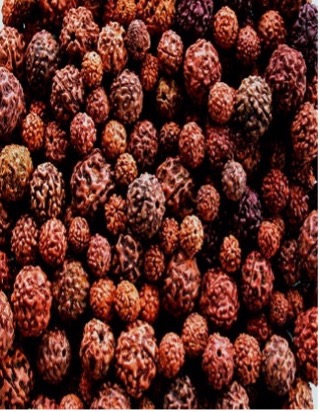
- Seeds are hard, grooved, with varying mukhis (faces or lines) – sacred in Hindu traditions.
Chemical Composition
Alkaloids (Elaeocarpine, Rudrakine)
Flavonoids
Tannins
Carbohydrates
Fatty acids
Proteins
Minerals: Magnesium, Calcium, Potassium
, Essential oils
Guna-Karma
Rasa- Kashaya,Tikta
Guna- Laghu, Ruksha
Virya- Shita
Vipaka- Katu
Karma- Hridaya, Manas shamak, Tranquilizer, Medhya, Grahaghna, Krimighna
Doshakarma- Kapha-Pittahara
Medicinal uses
Used in hypertension, anxiety and mental disorders.
Promotes concentration, calmness and spiritual focus.
Helpful in palpitations, epilepsy and insomnia.
Anti-inflammatory and anti-oxidant effects.
Used traditionally as a neuroprotective and adaptogenic agent.
Useful Part
Seed (bead), Leaf, Fruit
Doses
Powdered seed: 250–500 mg
Fruit decoction or extract: 10–20 ml
Important Formulation
Rudraksha Churna
Rudraksha Taila
Rudraksha Kwath
Shloka
रुद्राक्षं धारणं पुंसां पुण्यं आयुः विवर्धनम्।
पापं क्षयति तत्त्रैव सत्यमेतन्न संशयः॥
रुद्राक्षो लघुशीतोऽतिपिच्छिलः कटुकोष्णकः।
वातश्लेष्मापहः शोथकुष्ठारुचिनाशनः॥
Hindi Name
रुद्राक्ष
English Name
Rudraksha Tree / Blue Marble Tree
Botanical Name
Elaeocarpus ganitrus Roxb. ex G.Don
Family
Elaeocarpaceae